

Sustaining the Natural Water Cycle on Campus
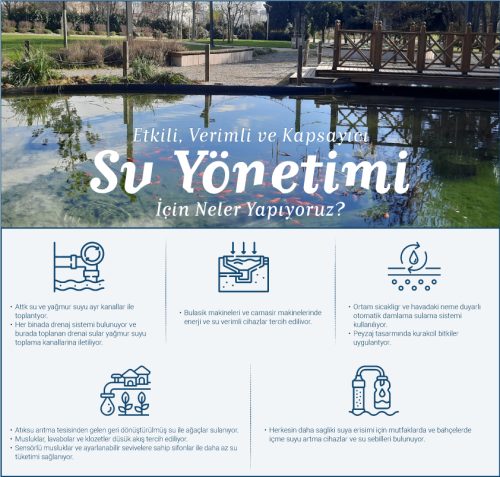
Measures have been taken to sustain the natural water cycle by expanding permeable surface areas, improving drainage systems, and increasing the amount of green space. Permeable pavement surfaces, walkways, and grid systems are used to prevent water runoff on hard surfaces. By reducing the extent of impervious surfaces, the campus also prevents a form of pollution known as non-point source pollution—caused by runoff that collects contaminants as it flows over hard surfaces.
Allowing rainwater to infiltrate through permeable surfaces and continue its natural cycle reduces the need to channel it into the sewer system and on to reservoirs, thereby saving both the energy and cost associated with water treatment.
THE FIRST STEP
TO REDUCE YOUR FOOTPRINT
STARTS WITH YOU!
Keep your shower time short (5–10 minutes).
Turn off the water while brushing your teeth or when not in use.
Wash your laundry less frequently and with full loads whenever possible.
Use energy- and water-efficient washing and dishwashing machines. If not, replace them with efficient ones.
Run your dishwasher only when it’s full.
Choose products made with low water consumption.
Don’t use drinking water for general cleaning purposes.
Increase the use of greywater.
Do not pour chemicals or vegetable oils into the sink.
Don’t litter to prevent water pollution.